I managed to get my hands on some land at long last. It's not very good land, and it's not easy to reach, "but it's mine and I love it."
It's twenty acres in Northern California near a small town called Igo not far from Redding at the north end of the Sacramento Valley. It's got hot dry summers and cold wet winters (with a few bits of snow.) The local ecosystem is what's called chaparral, "a shrubland plant community ... found in areas with steep topography and shallow stony soils".
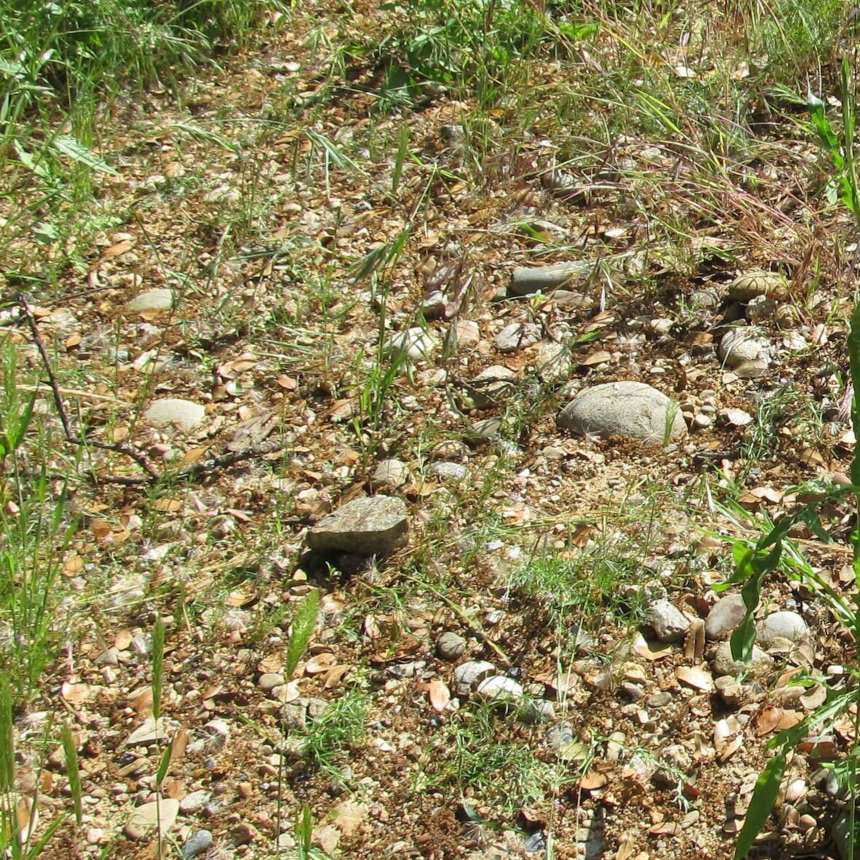
Have we got stony soils. The whole place is classified as "gravelly loam", it's just rocks upon rocks in a loam matrix up to ten meters (thirty feet) deep. It isn't really soil, it's literally just rocks and rocks and more rocks. I suspect it's the alluvial remains of something like the Great Flood of 1862.
It's not yet widely known or appreciated that the West Coast of North America is regularly subjected to epic floods.
... sediment research ... found that "megastorms" have occurred in the years: 212, 440, 603, 1029, c. 1300, 1418, 1605, 1750, 1810, and, most recently, 1861–1862. ... for a historic recurrence of, on average, every 100–200 years.
~ Great Flood of 1862 :: Wikipedia
It will happen again. The USGS (United States Geological Survey) estimates that the likelihood of a so-called Atmospheric River 1,000 megastorm or "ARkStorm" event is now "once every 25–50 years" due to climate change, and could cause "economic losses of over $1 trillion".
So there's not much point investing in permanent agriculture or buildings here. It's also zoned agricultural, single residence so I could build a house here but I can't build a neighborhood or village here. I might be able to host workers if they're helping with the agriculture, and I think I might be able to operate a campground if we met the legal requirements.
There are insane temperature swings here from day to night. It's not unusual to have a difference of thirty degrees Fahrenheit between daytime and nighttime temperatures. That's what got me thinking about protective greenhouses in the first place. Before I first visited the site I had grand visions of making a food forest integrated into the local ecosystem. It quickly became apparent that that was not going to work simply because most plants won't survive here without protection from the elements.
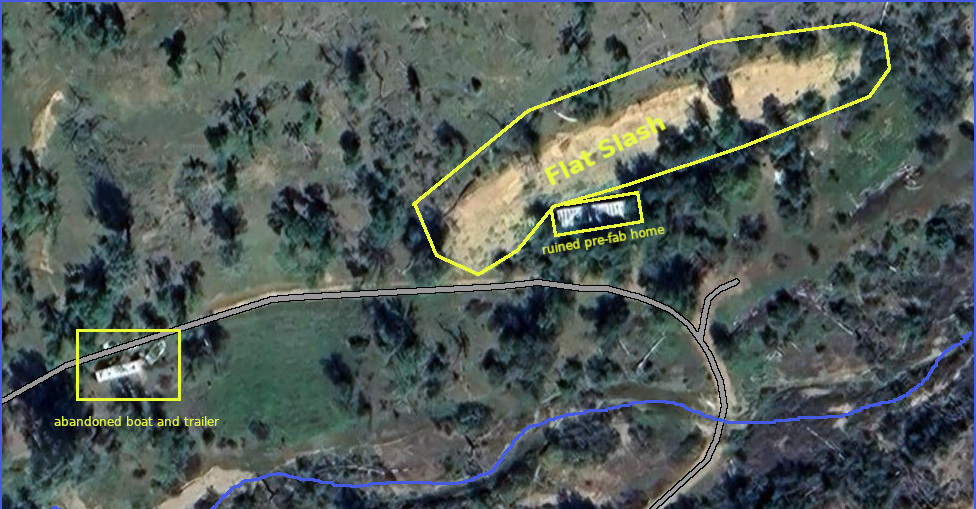
For our purposes the main features of the land are:
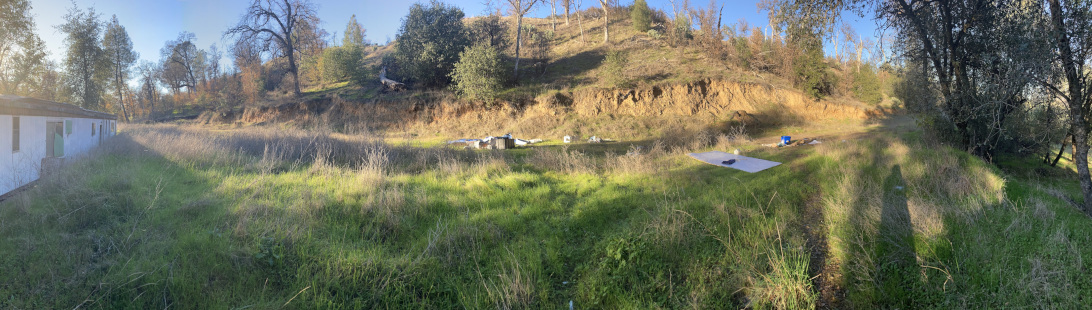
There's also a well that runs off 220V. We had a generator and tested it and it worked fine, but the generator stank so bad that we stopped using it and gave it away. I'm hoping to conserve water carefully so as not to have to use the well at all, but we'll see how practical that is. I haven't looked into water rights yet, in some places you're not supposed to even collect rain!
There are of course many trees and bushes, and grass and small plants and shrubs are everywhere. There are at least three nice meadows that could be used for grazing or more gardens, but other than little experiments here and there I think most planting will be confined to the Flat Slash, at least for the first year. We might let the chickens free-range in the meadows from time to time, but I'd rather not disturb the local ecosystem too much. In this case, harmony with the ecology takes the form of kind of curating the area, rather than barging in and tearing things up to impose my own whims. For example, when we first got there there was a pile of small, short logs around the well head (I don't know why.) When I was clearing them away I uncovered a next of some small furry critters, about three or four little baby chipmunks or something. I carefully covered them back up and left the spot alone for two days and when I checked again they were gone, so I hope their mama moved them to a new nest. Everything here is like that. You can't create here unless you first destroy. Even the dead wood: there are insects living under the bark. Beetles and such. Several areas are overgrown with Star Thistle, which is something I feel okay about using as roughage for compost and mulch, as it's a classic "non-native invasive" species, but most places are brimming with good old California native plants and bugs.
That's what makes the Flat Slash so appealing: it's already been messed up by other people, so I don't feel too bad about reusing it for gardens and a conservatory, etc. There are plants growing on it, and spiders and bugs, and some little frogs in the soggy bits, so I still feel a little mournful about that. Everything has to count. At the very least I want to clean the place up, there are bits of junk and trash everywhere.
So what can we do with this land?
The first consideration is very prosaic and practical: I'd like this land to pay for itself. The mortgage and taxes are very low, but there's some maintenance and cleanup that really should be done and that's likely to cost thousands. Just getting rid of the decrepit pre-fab house will likely cost several thousand dollars.
The second consideration is to enjoy growing plants. I love to garden, I love plants, and now I finally have enough room to really get down to it. The idea of growing all of our own food is probably a step too far, but I can certainly grow a lot! I used to look out on the bit of grass in front of our old place in the city and think about how much food I could grow there instead if they'd let me, and now I have acres! I'm gonna grow so much food. It would be very nice to grow as much of our own food here as we can, and have food to sell or give away, especially fresh veg. Maybe not our own wheat, but probably our own corn and potatoes? Fava beans?
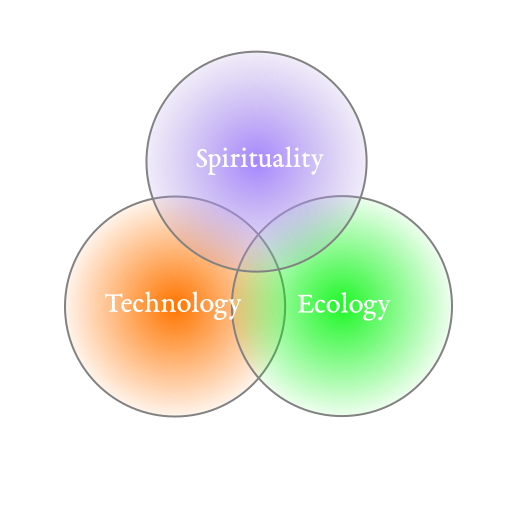
Last but not least, this Ariadne Systems thing: how to convert to a low-cost ecologically harmonious lifestyle? I can't actually build a village here but I can develop the methods and materials to do it elsewhere, including the living "stock" that you'd need to set up a complete and working living neighborhood with integrated ecosystems and infrastructure. Remember, the "product" isn't the eco-village, the "product" is the system to create eco-villages (that create eco-villages that create eco-villages, etc., that, when combined, become the new eco-city.)