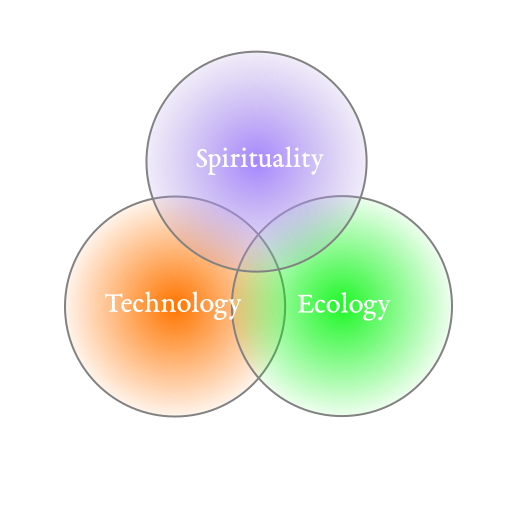
The core of the plan is simple, we're going to build new cities that work in harmony with Nature, unifying ecology and economics:
We're going to build new cities one way or another. Even with global population growth leveling off we are not going to stop building cities overnight.
... over the next 20 years, we are doubling the land coverage [of cities]. And those plans are on the drawing table, right now
~ "Building cities with ecological harmony", Dror Benshetrit, 2023
Since we're going to do it anyway, we might as well do it in a way that isn't self-defeating and build these new cities as places of vitality and regeneration. We'll start by building a regenerative neighborhood. If we can do that, and repeat it, and accelerate the building process to the point that it outpaces the existing urban construction process, we might be able to bend the course of human development back into alignment with the course of Nature.
We have acquired some twenty acres of land in Northern California. It's not very good land, but we got a good deal on it. It is not zoned for residential development, so we can't build a village there, but it can serve as a foothold to develop resources for later village construction, and converting it to a working farm will allow it to be mortgaged or sold to finance the purchase of land more appropriately zoned.
Climate change is making the weather chaotic and unreliable. To protect ourselves and our farms we're going to have to build greenhouses, and if they're large enough we should just live inside them ourselves in less involved structures than whole houses or apartment buildings (at least temporarily.)
Once we have protection from the elements over a large area we lay in a living neighborhood with low embodied energy structures for temporary living space and facilities for food production and waste handling.
The primary industry of the people living in the first neighborhood is to build more neighborhoods. We acquire more land, build more greenhouses and living neighborhoods, and then the folks living there do it too, making for exponential growth of ecologically harmonious living. (In computer terms this plan is a recursive function.)
As the layout of the neighborhoods is firmed up, we can replace the temporary structures with more conventional (but still ecological low-embodied-energy) buildings. I don't expect most people to want to live in tents their whole lives.